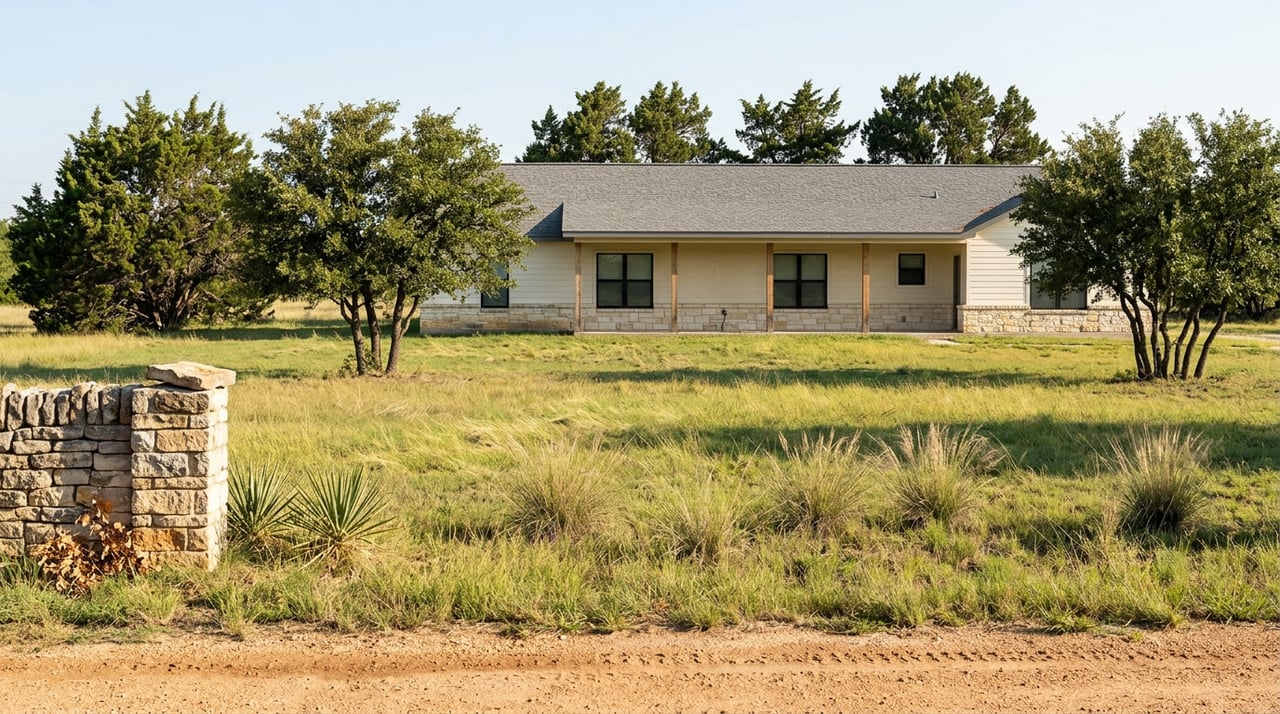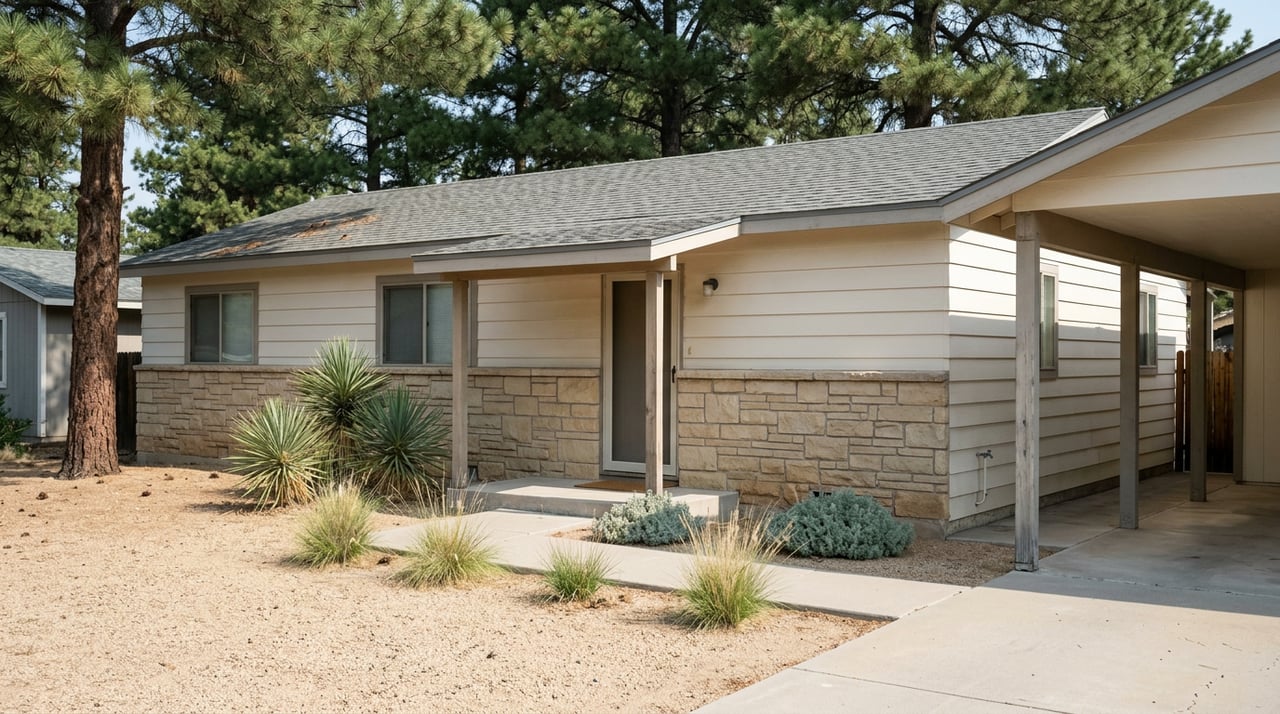
Comps will tell you what a bungalow on Mount Vernon sold for last spring. They will not tell you why one closed at full ask and the one two doors down came in $38,000 under after inspection. In Prescott's historic overlay, the spread is almost never about the granite or the roof. It is about the two files that stay attached to the parcel long after your name comes off the deed, and whether you handed them to the buyer in shape or let escrow discover them cold.
Both files are public. Both are recoverable. Neither is optional. And the seller who assembles them before the sign goes up is the seller who holds the price the seller who waits for the buyer's due diligence gives back.
The overlay you actually live in
Prescott is not a city with a historic block. It is a city built almost entirely of them. The City of Prescott's Historic Preservation office confirms 13 Local and 13 National Historic Register Districts, encompassing over 800 National Register properties. The property owner's guide names the surveys most sellers walk into without realizing it: East Prescott, West Prescott, Pine Crest, Fleury's Addition, the Historic Homes at Hassayampa, Joslin and Whipple, Mile High Park, Prescott Armory, South Prescott Townsite, and Whipple Heights. The South Prescott Townsite alone carries 97 contributing buildings. Courthouse Plaza, the district that draws the postcards, has been on the National Register since December 1978.
Whether your home is a "contributor" and whether the district is Local, National, or both changes what a buyer's agent asks for during the inspection period. And the review process is not the same on both sides of that line.
| Designation | Who reviews exterior work requiring a permit | Where the meeting happens |
|---|---|---|
| Local Historic District | Prescott Preservation Commission (7 members) | Second Friday of each month, 8:00 a.m. |
| National Register only | Historic Preservation Specialist, administratively | No public meeting required |
| Local + National | Preservation Commission governs review | Same monthly schedule |
The Commission was established in August 1980 under Ordinance 1461 and operates under Chapter 1-22 of the Prescott City Code, which gives it authority to approve, approve with conditions, or disapprove plans to remodel, demolish, move, or change the exterior appearance of any building in an established district. If your window replacement, roof reshingle, or porch rebuild during the last ten years happened without that review, that gap is now a disclosure question, not a design question.
File one, the Preservation Commission trail
Almost every seller I sit down with in a Local district has done exterior work at some point. Almost none can produce the paperwork on the first ask. The problem is not that the work was wrong. It is that a buyer's lender, a buyer's inspector, and a buyer's insurance carrier all read a permitted, reviewed job differently than an unpermitted one on a home that is a contributing structure in a National Register district.
Two things happen when the trail is missing. The buyer's inspection report lists the exterior scope as "no evidence of permit or Commission approval on file," which the appraiser then flags. And the buyer's agent uses that flag as leverage against your price, on the theory that the buyer may need to bring the work into compliance after closing.
Pull the file before you list. What you want in your listing binder:
- Every building permit on the parcel for the last 15 years, from City of Prescott Community Development at 201 S. Cortez.
- Any Preservation Commission agenda item or approval letter tied to your address, retrievable from the city's public meeting portal.
- The Arizona Historic Property Inventory Form for your parcel, on file at the Community Development Department, the Prescott Public Library, and the Sharlot Hall Museum Archives.
- A written note from the Historic Preservation Specialist on any past administrative approvals if your home sits in a National-only district.
If a piece is missing, the fix is a one-cycle problem, not a one-escrow problem. The Commission meets monthly. An after-the-fact certification is a conversation, not a fight, provided the work conformed to the Secretary of the Interior's Standards. You have time to have that conversation before a buyer's inspector writes the sentence that costs you leverage.
File two, the SPT clock that isn't yours
The second file is quieter and more valuable. Arizona's State Historic Property Tax program reclassifies eligible owner-occupied historic homes from a 10% assessment ratio to 5%, which the Arizona State Parks SPT page describes as a 35 to 45 percent property tax reduction depending on local special assessments. The reduction is the headline. The mechanism is where sellers and buyers get in trouble.
SPT is a 15-year agreement, authorized under ARS §42-12101 through §42-12108, that binds the property to the Secretary of the Interior's Standards and requires SHPO review and comment on any project affecting the home's publicly visible appearance. And the classification travels with the parcel, not with you.
Per the Coconino County SPT FAQ, the reclassification is based on the property's eligibility, not the owner's, so the classification remains valid once the home is sold. The seller is asked to notify SHPO with the new owner's name and address. The buyer inherits the balance of the 15-year term and the maintenance and review obligations that came with it.
Which means three things at the transaction level. A buyer who wants to keep the tax treatment must file a Change of Ownership Affidavit with SHPO, notarized, with two current photographs of the property, within the window the assessor requires. A buyer who plans an exterior renovation immediately after closing needs to route those plans through SHPO before starting, or the property can be disqualified and hit with tax penalties. And a buyer who did not know the parcel was enrolled at all can be surprised by both the benefit and the restriction six weeks after moving in.
Sellers who understand this file price it into the listing. Sellers who do not, hand a five-figure lifetime tax benefit to the buyer without asking for anything in return.
Where these two files collide at the appraisal
Prescott appraisals inside the overlay run into a specific reconciliation problem. Comparable sales inside the historic districts are thin in any given month, and the appraiser is often asked to justify condition adjustments against homes with materially different regulatory histories. A contributor to the East Prescott Historic District with a documented Commission-approved 2019 roof, a clean SHPO file, and an active SPT enrollment is not the same asset as a visually identical contributor next door with three unpermitted exterior changes and a lapsed SPT.
The gap is real, and it does not show up on a portal. It shows up in the appraisal narrative, and it shows up in the concessions the buyer's agent asks for at day 10 of the inspection period. The seller who has both files ready loses no leverage at that moment. The seller who does not, discovers the friction while the clock is running.
Prescott is also mid-way through updating its 1998 Historic Preservation Master Plan, with a completion target at the end of 2027, per the city. The current draft direction is worth reading if you own inside the overlay, because it shapes what future exterior work will require. But it does not change the seller's near-term math. The near-term math is still the two files.
Staging the paperwork before the sign goes up
The sequence that keeps the price:
- Pull the parcel's permit history and Commission agenda mentions from City Community Development. Give yourself 30 days.
- Confirm the district and the property's contributor status against the Arizona Historic Property Inventory Form on file.
- Ask SHPO whether the parcel is currently enrolled in SPT, and if so, the year the 15-year term ends.
- If exterior work in the last 10 years lacks a paper trail, put a written after-the-fact review request in front of the Preservation Commission at the next second-Friday meeting.
- Order the general inspection and the wood-destroying organism report before listing, so the buyer's inspection has nothing new to find on wood siding, porch framing, or original sash.
- Package all of it, with the Preservation Commission approvals on top, as the second attachment to the MLS listing after the seller's property disclosure.
Do this and the buyer's team walks into due diligence with nothing to negotiate against. Skip it and you will be reading the buyer's inspection response with a pen in your hand.
FAQ
Does National Register listing prevent me from selling, remodeling, or painting? No. National Register listing on its own does not restrict private-money changes to a listed building, including sale or demolition. The restrictions attach when the owner elects SPT or when the property sits inside a Local Historic District that requires Commission review for permitted exterior work.
If I never enrolled in SPT, does any of this apply to me? The Commission review side still applies if you are in a Local district and did permitted exterior work. The SPT tax file only applies to parcels that were enrolled, either by you or by a prior owner. Ask the Yavapai County Assessor which classification is currently on the parcel.
Can the buyer opt out of the SPT agreement after closing? The buyer can let the classification lapse by failing to maintain the property or by putting it to an income-producing use, but "opting out" triggers penalties rather than a clean exit. Most buyers who understand the math keep the enrollment and treat the SHPO review requirement as the cost of the 35 to 45 percent tax reduction.
Which Prescott districts are we talking about, specifically? Courthouse Plaza, East Prescott, West Prescott, Pine Crest, Fleury's Addition, the Hassayampa Historic District, Historic Homes at Hassayampa, Joslin and Whipple, Mile High Park, Prescott Armory, South Prescott Townsite, Whipple Heights, and several Local Preservation Overlays layered on top. If your address falls near Mount Vernon, Marina, Alarcon, Pleasant, Goodwin, Willow, or the Country Club Drive corridor at Hassayampa, assume you are inside one until the inventory form tells you otherwise.
Selling inside Prescott's historic overlay is not harder than selling anywhere else in the quad-city area. It is different, and the difference is almost entirely in the paperwork you gather before the first showing. If you own a contributor inside one of the districts named above and you are thinking about the next 12 months, Paula Stears Thomas and the PST team will pull the files with you, sit the review timeline against your listing calendar, and price the SPT enrollment into the marketing rather than surrender it in the negotiation. Get your free home valuation and we will start with the two files.